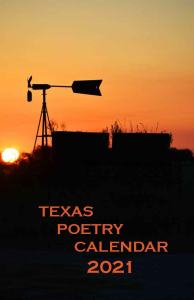
Here's a selection of the hundreds I've published in journals--both recent and older, from near and far--over the decades.

|

|
angle of sun
dry winter grasses
staying alive
|
|

Also includes two other haiku,
"earthmovers" and "we listen"
|
legs flailing
a beetle's plea to set
the world right
|
|

A New Zealand journal--kia ora!
|
slow simmer
in the labyrinth
staying inside the lines
|
|

A haibun!
|
|
The Boxer
Papa says he needs to speak to me in private. Papa is what we call my grandmother’s second husband, who despite his age and his drinking, is solid as a brick. A holdover from his years in the ring, like brain damage from having been battered too often in the head.
impressions
that last a lifetime
scar tissue
Even as a child, I openly disdained Papa, who favored brawn over brains. I knew who was responsible for my grandmother’s bruises and black eyes. Once a fighter, always a fighter. Papa spoke in jokes, put-downs, and crude Chicago expressions like yosh and jagoff. In short, he was everything I hated.
for better
or for worse
those brute fists
I am uncomfortable when Papa pulls me aside. He begins, “I’ve never told you this—and promise you won’t say anything to anyone, especially your mother—but I thought you should know that I’m your mother’s real father, not your other grandfather.” He refers to my grandmother’s first husband, who my mother clearly looks like in features and coloring. I’m dumbfounded, disbelieving. I reply with silence.
Later that night, I tell my siblings what Papa has told me. They laugh it off. He has already given the same speech to each of them.
truth or dare
shifting secrets
of family history
|
|

In English and German!
|
dark so near
for something this white
moonflowers
|
|

|
|
My Old Girl, My Baby
pre-arrangement
digging a hole
for the last cat
slow descent
of the black anchor
the heavy wait
extending her suffering
by putting off my own
kitten to crone
last hours
the droop
of a ragdoll
it's okay
repeating the lie
for both of us
summer solstice
and the day gets longer
burying my cat
|
|

|
the last notes
on the cellist's bare back
cranes in flight
|
|
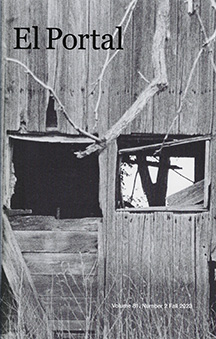
Also includes another poem,
"These Hills in the Distance"
|
|
Winter Walk on the West Mesa after an Argument
Bitter winds from the northwest arrive,
the city below clearer than yesterday.
Snow atop the Sandias and Manzanos--
or is it the play of afternoon light?
Wisps of clouds sink in wedges of canyons,
triangular shapes like huge arrowheads.
Steam from a power plant ten miles away
blends into clouds--which is which?
Volcanic rock wet from rain on the mesa,
blacker, sharper, than the usual chalky gray.
One last dry leaf on a sole cottonwood.
No birds in sight, no people besides ourselves.
Side by side, we haven't spoken in an hour.
I only know what I am thinking.
|
|
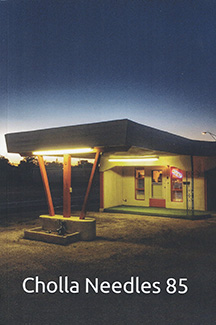
Includes six haiku--
and six of my art pieces
|
canvas--
lightening the burden
of white
|
|

|
this fine grit
coating every surface
your visit
|
|

|
|
January Gray
The flannel sheets should have been washed
weeks ago, given our night sweats from fever
and desiccating winter skin. Better late than never.
Out the window, a paraglider floats high
in abandon, but all I can envision is landing
and neighbors recuperating from from knee replacement.
The swish-swish rhythm of the agitator, more
annoying than soothing, like most things
these days: news, weather, popular music.
Somehow we've become the old ones
with aches, pains, and fistfuls of pills
spread out across all hours of the day.
Gray water of the wash cycle, but even rinse
water looks dingy. Two stupid pigeons
flap furiously as they attempt to defeat
the "pigeon-proof" feeder, sending seeds
and feathers flying, spooking the finches away.
To be a finch and not a pigeon: to be spray,
not slow and bulky; clear water, not gray.
The sheets will smell like spring soon--at least
for a few days--though we'll retain our winter scent.
We'll fit them to the bed, bending as best we can.
Outside, a teenager on a skateboard goes airborne
on the sidewalk, makes a full turn, and lands
back on the board as if this feat were nothing.
We recall a time we could leap without thinking,
dress without leaning. But we're still here,
and tonight we'll have clean sheets where we can
dream of flight and other impracticalities.
|
|
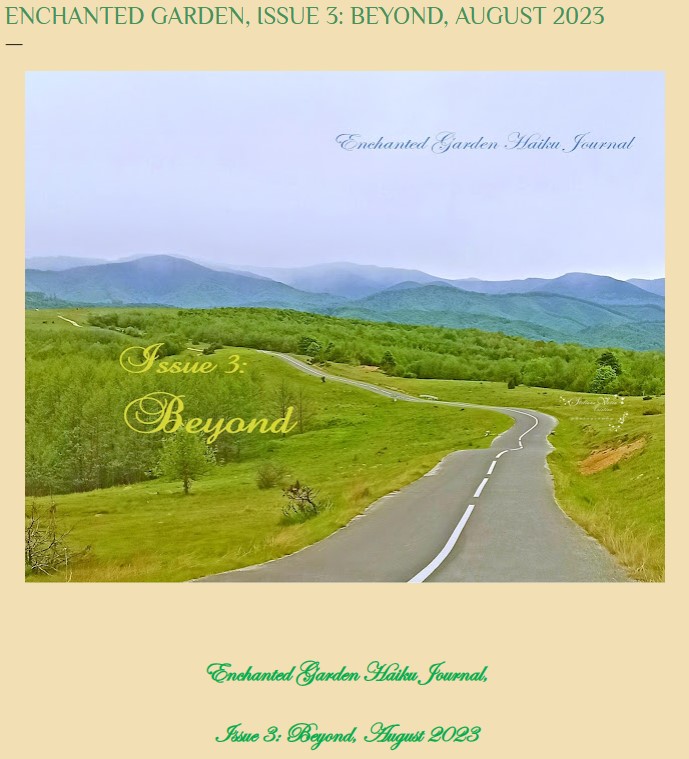
In English and Romanian!
|
slow measure
of dunes at White Sands
desert moon
măsurând lent
dunele Nisipurilor Albe
luna pustie |
|
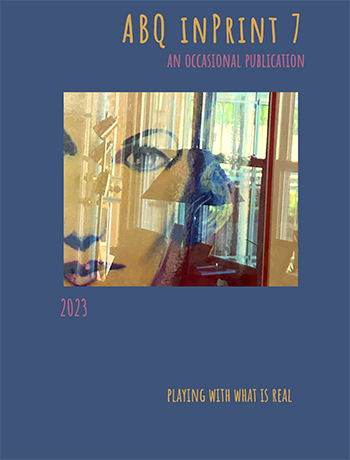
Also includes "Viewing After Hours"
and two of my art pieces!
|
|
One Week: A Parable
On Monday, red as rash, a scar appeared
across wide skies, its purple edges weird
and harrowing. By Tuesday morning, rain
began to effervesce like cheap champagne,
then drizzle, but the blemish spread its seam
through Wednesday, flooded down a thick black sheen
of something oily, unctuous, Nonstop . . .
By Thursday, every surface was a soup
of viscous glop, both land and water, woe.
The scar, on Friday, disappeared, although
Earth remained flocked in black, impossible
to flay or flame. By Saturday, the toll
was plain: all plants had withered in the tar
and Sunday prayers were moot. We breathe the scar.
|
|
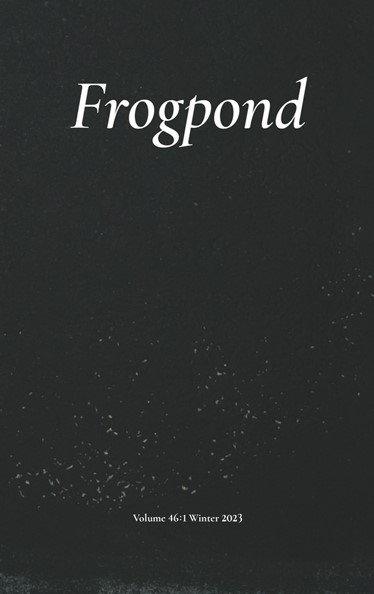
|
birthday somewhere my ex celebrates
|
|

|
deadheading
the bird of paradise
rainbow's end
|
|
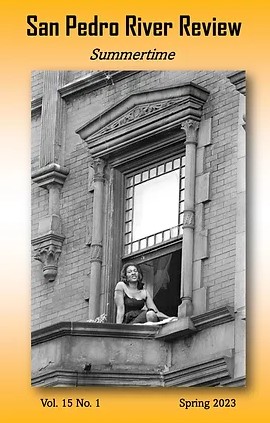
|
|
Confession
The moon looms
white as an inquisition,
bald-faced, wide-eyed,
leaving no room for lies.
The midnight of you
washes on my shore,
glistens like waves
of silvery questions
over and over and over.
|
|

|
|
Pause
with a nod to Rebecca Dunham's "This Is a Letter"
This is a moon for a January so cold
the roots of Ponderosa pines shiver.
A moon whose light is distant and fading
like the last flickers of a galaxy long extinguished.
A moon whose best friend is a headstone.
This is a moon for the hungry with gravel in their mouths,
for the thirsty with water deep
out of reach in the bowels of the earth,
for the final phone call, the last email,
the terrible alone.
This is a moon that doesn't rise,
or if it does, never shows more than
a clipped fingernail of its yellowed self.
This is a moon for the numb,
for arms that can't feel and legs that won't move.
A moon for a time when there is
no tide, no warnings, no new moon.
This is a moon for the miserable
whose fingers grasp ever-shifting grains.
This is a desert moon too long on hold,
an orphan huddling for a sliver of warmth.
|
|

Another golden shovel!
|
|
Listening to Time
incorporating a Bashō haiku
The stillness
of night wings, the gentle piercing
of dark heavens, the
soft echoes of this terrain of rocks.
A high desert mesa, the
stars: quiet has a sound.
Fleeing the past in the silence of
now, it returns, droning like cicadas.
|
|
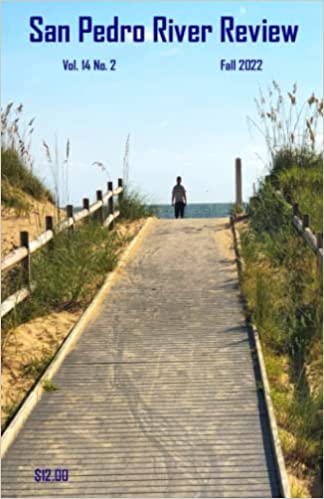
A light-hearted pandemic ghazal!
|
What We've Become Used To
Forgive me for eating a year of comfort food this month.
My intent was purely self-serving--not to be rude--this month.
Excuse me for not picking up a pen, a phone, or a thought.
Low testosterone could be the reason, not just my mood this month.
Ignore the mulch of hair around the sink--at least I trimmed my beard.
This eczema's such that I've scratched and remained nude this month.
Pardon the abstract art patterns, my work in progress in the toilet bowl..
The online doc claimed I'm fine, the one I virtually sued this month.
Overlook the mound of mail on the counter, just junk anyway.
Brownies and chipas, as ever my bloody fingers, chewed this month.
Disregard the underwear on the floor. I'll get to it when I run out.
I can go commando awhile longer--not like I'm a prude this month.
Indulge? Yes, I've learned to indulge myself. Why waste love on a pet?
Grubhub and Doordash deliveries--easy, my attitude this month.
|
|
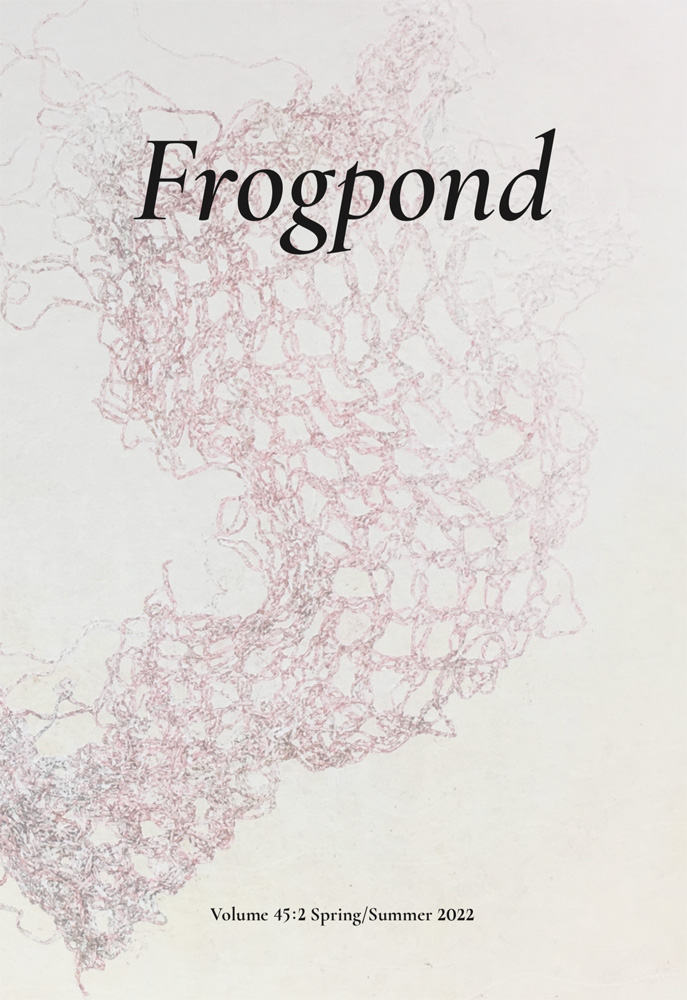
|
arroyo
wading through bones
of tumbleweeds
|
|

|
Starting with a Line from Cole Swensen
Length over width to make the horizon run straight,
as if it would not run straight otherwise,
as if it might launch into the stratosphere
and cosine into the curve of a perfectly round moon..
We stumble over and over with long division,
but we know in our hearts something about fractions.
We know the world shrinks away into nothingness,
grinds the mightiest of mountains down into rubble.
We feel that infinitesimal grain lodged under the sole,
know that even a percentage of a tiny
percentage can impede progress,
make us feel every terrible step of the struggle.
Tomorrow and tomorrow, again and again:
planting the garden, harvesting the fruit,
leaning into the earth's subtle dimensions,
length over width, height over heft,
the slim volume of our ways and our days.
Only so many days to do what we need to do,
and the countdown is always nipping at our heels.
|
|
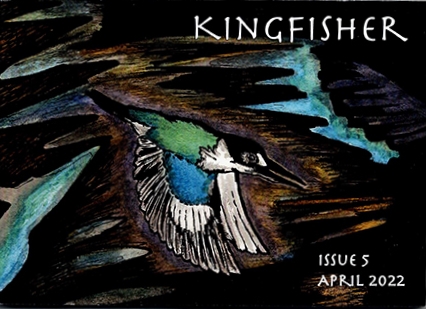
Two haiku, including a monoku!
|
lost too many mountains to name
my hand
in the fine print
of his grip
|
|

|
Finding Home
All my life I have wanted to be here.
Here, where mountains breathe in the distance
and skies cut around them like collages;
here, where desert floors bloom in earth tones
and browns are more prevalent than greens;
where winds go dead as if the world has stopped,
then pick up with the fury of cyclones,
air filled with the smells of piñon,
the sounds of aspens, the taste of ash;
here, where sun burns shadows clean and white,
where mud is molded and sculpted,
tin is punctured, stones are scooped from earth;
where my heart glows like a kiva.
All my life I have wanted to find home.
|
|

Also includes "Catholic Boys, 1960-1967"
and my sonnet "Early Morning Gaze in the Bathroom Mirror"
|
Doubting Thomas
Despite your doubts, you thrust a finger in . . .
then another, all the way to your palm.
All the way, another trial you’ve palmed.
Your mouth goes there, your tongue an auger.
Your tongue goes there, as mouths had augured.
Blood-red skies stay silent; ground does not fissure.
Bloodshot eyes hold ground, silvered by the fissure.
Experience is the test of temptation.
Taste temptation to savor experience.
How many days in the desert is enough?
Enough days to desert any tenets
or to prove truths submerged in yourself.
Find proof of your true self. Immerse, confirm.
Dispel all doubts: thrust those fingers in.
|
|

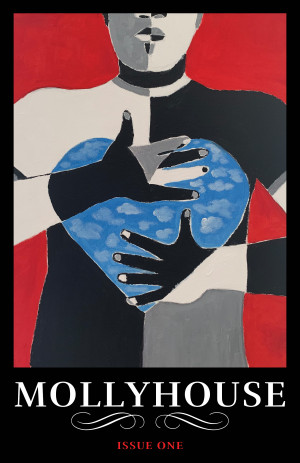
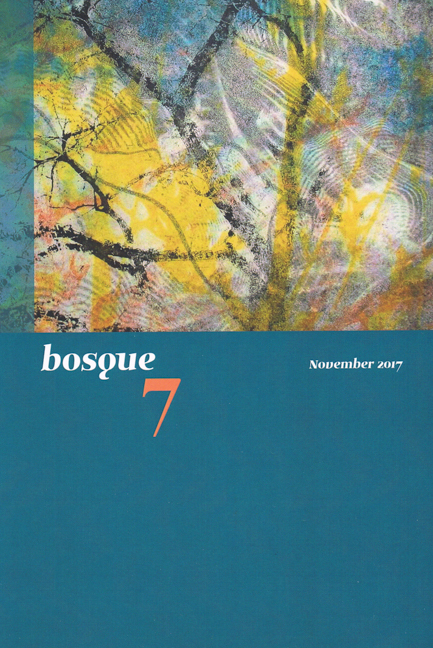
Inaugural issue with a divine cover by friend
Denise Weaver Ross. And yes, a villanelle!
|
Not as Gradually as We Thought
When bodiews slow down, the futurre proceeds too fast.
Oh, the futility of raging against the dimming of the day
when the present begins to feel like the past.
With each fleeting week, the end is again forecast
in stone. Muscles grow weak and hair goes gray
as bodies slow down. The future fizzles as fast
as a pin-pricked balloon. Our mouths aghast
at how we've finished the work of life's resume,
how the present begins to fall into the past.
The young get younger. We've been surpassed
by generations whizzing down the Time Expressway.
Our bodies slow down. Only our future proceeds that fast.
Foot to the pedal, we go nowhere in stark contrast.
Our memories more distant, on slow replay
as our present begins to feel like our past.
Years once seemed a galaxy star-filled and vast.
We've reached the horizon line, that gateway
when bodies slow. The future proceeds so fast
that even the present begins to feel like the past.
|
|
Poetry of Place issue
|
An Empty Field
We dug and dug
like prairie dogs,
shoveled for days
till the hole
was big enough
for the two of us
to lodge ourselves,
deep enough
that we couldn't
see above it.
We found boards
from construction
sites, wood from
discarded pallets,
and whatever we
could scrounge
from our fathers'
workbenches.
We nailed together
a roof of sorts,
hardly airtight, flat
as a carpenter's rule,
with an entryway
just large enough
to slither through.
We furnished
the shelter with
a rug from a dump
and a metal milkbox
for essentials
like a flashlight,
matches, and gum.
Dirty, uncomfortable,
it was ours--even if
deep down we knew
it couldn't save us.
|
|

In addition to this sonnet, also includes three other poems--
"Canyon at Kasha-Katuwe," "Fall Equinox," and "Open Bar,"
in a gorgeous two page spread.
|
|
Reveries While Walking the Mesa on the Hottest Day of the Year
Down there the city quiety burns up,
heat crying agua, agua, rising waves
visible, ghostly swelling from the map
of desert lands below. Nothing else moves--
just air, possessed, alive, as if the stacked
spirits interred over eons have been
released into the atmosphere, and cracks
of matted canyons are portales seen.
The rocks tell stories. Seas once thrived in lands
now dry, and temperatures increase with each
sad day: Could this be how the planet ends,
with barren fields, waterless, as we watch
the world wither to dust? How long till we
become the ghosts and join eternity?
|
|
A prose poem, but the issue also includes
"Data, Affirmative," another persona poem.
|
|
Hemingway's Favorite Cocktail
I’m on my sixth Death in the Afternoon, the Black Lagoon quiet as a dive bar gets around this time, plopped in my usual spot at the butt end of the bar, the seat known as Skip’s Stool. I’m about to order another when Donny splats down beside me, so I add, “And one for my friend,” who regularly shows up about now. Donny hates the familiar Don as much as he despises the formal Donald, but if you call him The Creature, he really goes ballistic. I’m Skip, by the way.
You know those fancy bars with swimming mermaids behind glass? Nothing like the Black Lagoon. We have a swampy aquarium with water that likely hasn’t been changed since the 1950s—at least it smells that way—but the owners think it adds to the bar’s mystique. No one’s ever tried to throw the thing out, and some patrons, like Donny, are attached to it. The barkeep sets down two more Deaths, which—come to think of it—have that same green tinge as the algae-ridden aquarium water, not to mention my friend’s once-emerald skin. Absinthe will change your pallor over time. Some say it causes hallucinations, or worse, madness.
Granted, Donny’s not the most handsome guy: an exceedingly bumpy complexion, a bald head with loads of loose folds, lips that look like a cheap actress’s bargain-basement collagen-injected kisser, and web-like hands with long nails that—frankly—seem more like claws. Nonetheless, he’s the first one to spot a hot lady. One of these days I expect him to overcome his shyness and walk out of here with a real looker in his arms. In the meantime, he’s a great listener who drinks like he’s half fish. So what if he doesn’t talk much? He’s there when I need him.
“Another round,” my fingers snap. Two more Deaths arrive, we raise them and toast to the depths of perception or whatever’s hidden away in that fish tank. If you’re pickled enough and gaze at it just long enough, it begins to feel like home.
|
|
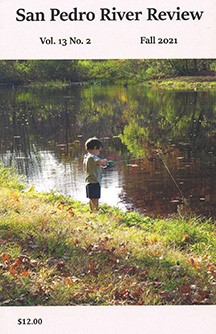
A traditional sonnet,
nominated for a 2021 Pushcart!
|
|
Monsoon Season
After the rains, volcanic rocks were black
as pupils. When did I learn that inside
they're white as chalk? Around the cul-de-sac
the sand- and mud-colored adobe dried
like paint in sun. The rainbow's arc was brief,
but wind continued blowing.
Now pines sway
and needles glisten for seconds. The sheaf
of rain marches across the mesa. Day
by day, I track these clouds, the sweep of sky
in all directions, weather's random whims.
A hummingbird sips on yucca, while I
consider distant downpours, canyon rims.
A streak of lightning fissures high and wide,
almost more knowledge than I can abide.
|
|

Another abecedarian sonnet--check out
the first and last letters of each line!
|
|
Know-how/Leeway/Might
Kowtow! Do it quickly. Kneel with hands like doves in the air, but stock-still,
mouse-like. Moves small as an itch will be misinterpreted. Best not have a gun,
or even a pack of Skittles. Don't drop a word of disrespect. Don't dare look up.
Quiver? Quaver? Some cops like to see that, but don't quarrel, rile, or run--ever.
Smiles may be provocations. Stay expressionless, impassive as a wall. Be a fort.
Under no circumstance, question. Nothing uppity. Best not have anything viewed as a shiv:
wine bottles, whistles, gum wrappers. Don't empty your pockets or reach for a glovebox.
Yes, Sir is the only response. Don't swear or even sweat. Don't seize a taser or spaz.
Acquiesce but assume anything could happen. Succumb. Never disturb or perturb
cops. Cease resistance. Cry or scream but keep it inside. Make peace with God.
Excuse those who need forgiveness. Expiate others, but also find room for yourself.
Good thoughts in case they're your last. Wish against hope, but wish. Wish
inspiration comes from whatever happens. Whisper the alphabet. Pray you make it to J.
|
|
|
|
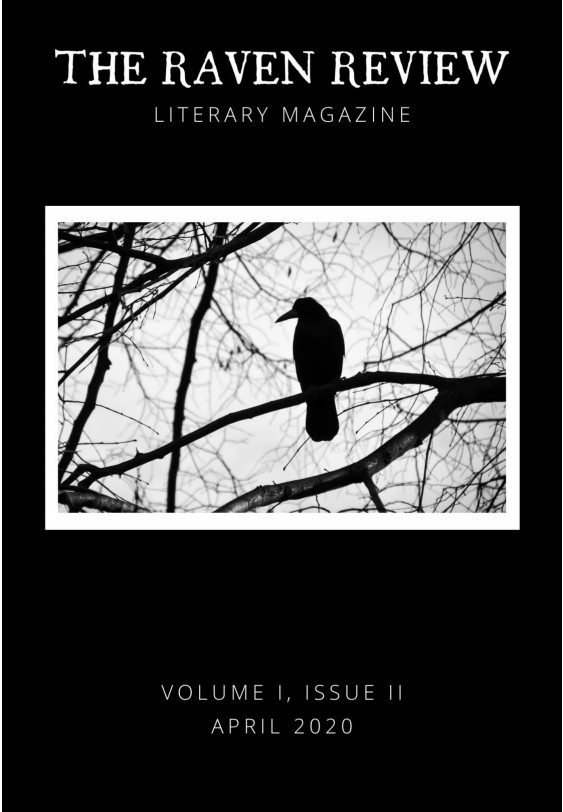
five ink runs--
the raven print
not black enough
|
|

|
|
Last Stop in Wine Country
Somehow
prosecco is the answer,
not the blueness
of drowned music,
not the pluck
of sleepy-eyed daisies,
their petals sipping
the sun like tea.
Afar, a mirrored lake
conceals its language
like a mother
disguised as a woman.
Somehow
the summons of wine
is the full-bodied trick
and the only ticket.
This glass matters--
like the first dozen
of these vineyards
of flowers, gates, grapes,
and angels' syllables.
Final words lock
onto the last crisp drop,
somehow
the superficial beauty
of someone else's
dream of home.
|
|
|
|
Fall 2020
Seven months since I last saw a sandhill crane,
but now they're back, a measure of lost time.
Doves and canyon wrens flicker and gather
as long as we keep them supplied in seed.
I have taken down and cleaned the red feeder
for warm-weather hummingbirds. The virus is still here.
The Don Juan roses court a last hurrah
before deep crimson bleeds into gray.
Leaves from corkscrew willows yellow and crisp,
collect in arrays under the patio table,
on which five-fingered racoon prints
trail to and from the summer pot of basil.
Most of the other herbs have withered,
though mint persists and rosemary stays true.
The pines heave with brown needles
like thick spiderwebs the wind can't shake.
Perhaps it's the drought. Even the monsoon
was a bust, more of a day than a season.
In January, I watched for an hour
as a red-tailed hawk tore into a pigeon,
dismantled the muscle and sinew,
left nothing but feathers and bone.
The carcass lies under the litter of needles.
Looking back, I know I witnessed an omen.
|
|
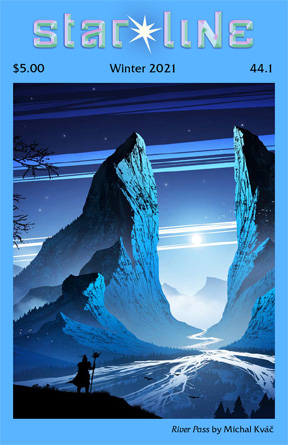
Another abecedarian sonnet--check out
the first and last letters of each line!
|
|
Alpha/Beta/Centauri
Aberrant heaven, an erratic, throbbing orb,
cataclysmic casualties light-years divorced,
eternities in defiant glances beyond the grief
guaranteed our hard-bitten time on this earth.
Intervals of luminosity from the edges, a hadj
keened through the ink of kohl, the cosmic whorl
mucking up dreams and dreads, our vision
oppressed as this muddle of finite sky-map.
Questions of quiddities, scourge and maker,
stillborn as glimpsed pulses long extinct,
undulating nonetheless, deplorable improv,
wanton mission with the impermanence of wax.
Yesteryears, ancient stars, and all that glitz.
|
|
Another abecedarian sonnet--check out
the first and last letters of each line!
|
|
Nonactivities/Oddities/Proclivities
Naps in the afternoon are nice, but then there's the return to
planning for meals, po-biz, political posturing: Boredom HQ.
Rise, perhaps even shine, but don't expect the world transforms.
Time has never been so tiresome, though those in the ICU,
vegetating, clearly have it worse: ventilators row upon row,
x-rays, excessive bloodwork, and absolutely no mobility--
zombies awaiting reanimation. But we're not much better. Ska
beats can't even energize. Our blood coagulates like automatic
drip systems on hold, month after month. We watch extreme
fringe groups on the news, mad dictators smirking, screaming
hordes of hot-tempered adherents hysterical as jihadi,
juvenile leaders that make us wish that we could just go back,
live in healthier, saner times--but we know that's a pipe dream.
|
|
Plus two other haiku,
"bruised skies" and "sleepy droplets"
|
|
welcoming
the dark side
stargazing
socially distant
and yet the scent
of his cologne
walking in sand
the distance
between us grows
|
|

Another abecedarian sonnet--check out
the first and last letters of each line!
|
|
Habit/Interest/Jump-Start
Homebound, hour after hour, the clocks confound. My husband and I,
juxtaposed on opposed sofas--he with a crossoword, me with a book--
live in a logjam of lethargy, the daily regimen of the new norm.
Netflix at night, occasionally a Zoom, some outstanding meals--gazpacho,
pesto soba noodles, chiles rellenos, risotto--nothing like Pok-e-jo's BBQ,
restaurant, or diner food. No parties, no gatherings, nor even dental visits
to put on calendars or attend. He writes his stories, while I have haiku,
vacillating from couch to computer. Indoors our skin grows yellow,
xanthous, but exposure to this coronavirus (or any other) is nearly
zilch. Masks, sanitizers, distancing: how to stay safe is not an enigma,
but at what cost to the spirit? These many months, stock-still, static,
day after day disappearing like dusk into darkness. And when this ends, will we
find breath without a ventilator, or will we go back to what we called living
|
|
An abecedarian sonnet--check out
the first and last letters of each line!
|
|
Whoa!/X!##X!/Yikes!
White, old, male: I am, my husband is. Three strikes against us these days. Here’s the crux:
You cannot do much about the race you are born into, nor can you wish or waltz
away aging, though many do their damnedest. Sex, though changeable, has its own rub.
C’est la vie. While not exactly loud and proud of it, I can accept being male, old,
Euro-American (but at least gay). What I cannot accept are all the others who huff and chuff,
gird themselves in privilege, and go on about how America is a land of self-made wealth,
impartial opportunity, and infinite possibility—but not a place for people named Samaj,
Kareem, Xotchil. I hear these old white men speak and I’m ashamed at their gall,
men who do not embody my beliefs though their bodies look like mine. Do they listen
only through their ass? These are the men who promote prejudice, their views a deep
quagmire of inaccuracies and prevarications, grasping to the last gasp of prior
sins and trespasses. Husband, we know change is possible, but too many used to entitlement
unfortunately won’t transmute. I think our time is up. I think we should expect the shiv.
|
|
Third of four sonnets in the sequence--
"Four Cotton Tales," all published here!"
|
|
III. Keeping Aggression in Check
A bunny jumps into our yard, as if
the spaces in our gate are meant for him,.
He stops and hunkers down, the herbs a gift
too good to pass, these months of drought so grim
that even mint is tempting this dry year.
His deep brown eyes look hungry, so I risk
my husband's wrath and let him munch. I'll hear
those goddamn rabbits, his usual list
of curses, worse if there's complicity
suspected. Silly wabbits, my response.
Those snuffling whiskers, scrunched-up noses! Me:
I can't resist. And though my husband wants
his herbs untouched, he's left a water bowl
near the mint, a small oasis that's full.
|
|

A prose poem that's a cento,
all lines from Raymond Chandler!
|
|
Raymond Chandler Drafts My Obit
He was California from the tips of his port wine loafers to the buttoned and tieless brown and yellow checked shirt inside his rough cream sports jacket. He breathed like an old Ford with a leaky head gasket. He just wanted to do wing-overs and sing the prologue to Pagliacci. His laugh and his voice were both pleasant. He talked the way New Yorkers used to talk before they learned to talk Flatbush. He sounded like a man who had slept well and didn’t owe too much money.
He was a guy who talked with commas, like a heavy novel. No visible scars. Hair like steel wool grew far back on his head and gave him a domed brown forehead that might at careless glance seem a dwelling place for brains. A few locks of dry white hair clung to his scalp, like wild flowers fighting for life on a bare rock. He was a windblown blossom of some two hundred pounds with freckled teeth and the mellow voice of a circus barker. The French have a phrase for it. The bastards have a phrase for everything and they are always right.
It was about eleven o'clock in the morning, mid October, with the sun not shining and a look of hard wet rain in the clearness of the foothills. The wet air was as cold as the ashes of love. There was a gusty wind blowing in at the windows and the soot from the oil burners of the hotel next door was down-draughted into the room and rolling across the top of the desk like tumbleweed drifting across a vacant lot. Big production, no story, as they say around the movie lots. A nice enough fellow, in an ingenuous sort of way. You would never know how he got that way because even if he told you it would not be the truth. Dead men are heavier than broken hearts.
|
|
A sonnet (surprise)!
|
|
Woodpecker
That unmistakable red cap, that fast
but nimble spiral up and out of sight,
the endless hammering, the nib that lasts,
a marvel of tenacity, the fight
to take on trees with just a beak. My ash
is full of ordered holes, in lines like rows
of sawdust-riddled desks, not a slapdash
affair: symmetrical, almost composed.
I should be mad, perhaps, but winged things are
inspiring--I would rather lose a tree
than this relentless drill-bit. Insofar
as I can tell, that Mel Blanc laugh must be
hyperbole: I hear a steady knock,
a low racket, nothing that seems to mock.
|
|
Also includes my ghazal, "Spring"!
|
|
Love Letter to a Naked Stranger
I know you as intimately
as I've known any man.
Even days later I think of you.
Each stiff wisp rising
over your brow into the air,
each shadowy imprint
muscled into your limbs.
From the streetlights of your beard
through the haloes of your chest hair,
down the alleys of your thighs
to the dark between your toes,
I know every stroke of you.
I should. I created you
in my own image, only better,
not some monster puzzled
together out of odd parts.
A man of age and substance,
of beauty and imperfections,
but nameless as a blank canvas.
Blame the artist, blame me.
Is this not an act of love?
So why do I ponder ways
of further improving you—
line-defined abs,
more effervescene in your eyes
a less contorted pose?
I fear it's too late.
Like every man, myself included,
I will have to learn to love
you as you are.
|
|
|
|
Process, Not Product
Start with a setting. A forest
in the mountains east of Albuquerque
will do. Add a sprinkle of moonlight
straining through the pinnacles of pines
as they shift and swoosh like fields.
And enough breeze to catch movement
around you—an animal skittering
across the forest floor, a branch falling.
Throw in a back story. A retreat
from an overbearing boyfriend. Time
to think things through. Blend in
a twist. A scruffy stranger
who approaches your camp site
at dusk. His leer as he fondles
a knife. The mindless run, the pure
escape to directionless darkness,
flickering shadows circling about.
Include a stumble—and blood, dribbling
down your head, your gashed hand.
Mix in a mountain lion—or even
just its low roar from a distance.
Scatter in a parcel of prayers.
It’s going to be a godforsaken night,
and the end is entirely up to you.
|
|

In English and German
|
|
twenty years on . . .
mom still mispronounces
my husband's name
zwanzig Jahr später . . .
Mutter spricht ihn immer noch falsch aus
den Namen meines Mannes
|
|
|
|
A Rose, A Woman
Deep as necessity,
a body folded, perfected.
The garden, a bare smile
of milk and bone.
An empty pitcher of moon.
Odors close about throats.
The dead in white,
coiled as scrolls and illusions.
Night bleeds petals,
the sweet drag of flowers and feet.
|
|
A glosa--and my longest poem ever!
|
|
Loneliest Place in America (excerpt)
Snow falling and night falling fast, oh fast
In a field I looked into going past.
And the ground almost covered smooth in snow,
But a few weeds and stubble showing last
--Robert Frost, "Desert Places"
A whisper of December, overcast,
I nonetheless pack the old Jeep and head
to desert. Though I live alone, out there
it's more alone--mile after mile of land
space, and myself. A place where I can think.
I use no maps, take dry dirt roads that lead
nowhere. I'm lost much of the time, nothing
new there. Not a single car in the past
hour. I pull over, get out, walk, and now
snow falling and night falling fast, oh fast.
I recall those clasps attached to winter
coats to keep us from losing our mittens,
something I have not thought of in decades.
Red wool, like my brother's great-grandmother-
crafter. These days how few friends have parents
living, much less older generations.
gone the way of vacuum tubes and phone books,
the way of many in my address book.
Nostalgia creeps in like a flash of red
in a field I looked into going past.
Time was I'd have been afraid of being
alone, afraid of leaving the city,
of deserts, weather, death. So many ghosts
materialized in my head--figments,
nothing more--but lifetimes to overcome
them. Land and space, and I am a granule
of sand here. Always was, just didn't know
till late in life. Years wasted in fighting
those fears. No illusions in this landscape,
and the ground almost covered smooth in snow.
Tumbleweeds still have some color, have not
detached from the sand and rocks they cling to
like children. Spring winds will release their grasp
and send them on a journey miles away,
perhaps far as my yard in the city.
Wanderers, meandering toward unknown
destinations. Snow keeps coming, and I
should wend my way back before dark descends.
Around me, snow, silence, and then nothing
but a few weeds and stubble showing last.
|
|

Also includes "This Is Not a Sex Poem"
|
|
Cocooning
a golden shovel incorporating a Basho haiku
Another winter
upon us, another season of solitude.
At desks, on chairs, in
separate rooms at far ends of a
cold house, we listen as the world
shifts to long nights of
silence, nights and days, one
and the same thin color.
We cannot hear the
rustling of the other, only the sound
of outside voices: cries of
ice on windows, of loneliness in the wind.
|
|

|
|
my shoeprints
on a cold trail
looking for yours
|
|

|
|
as if she cares
telling my cat
how long I'll be gone
walking into
my long shadow
trying to keep up
original sin
skies are spotless
this Father's Day
|
|
Another ghazal!
|
|
The Mystery of Belief
starting with a Dickinson line (#1084)
At half past three, a single bird unto a silent sky.
The mystery begins with an airy clue, a silent sky.
Look down: avoid the washed-out sections of the trail.
Look up: an imagined rattle can imbue the silent sky.
Some see a mirage of God, some a God of mirage.
Close your eyes tightly--don't misconstrue a silent sky.
Withdrawal is a familiar pattern; apology, another.
You try all day but cannot see through the silent sky.
By half past ten, the velvet canvas fills with stars,
the evening fragrant for a rendezvous, a silent sky.
Put your ears to your hands, your hands to the ground.
Believe what you feel, Scott, adieu this silent sky.
|
|

|
|
At Canyon's Edge on Rosh Hashanah
for Debbie Winegarten
I wailed your name,
which echoed back--
Debra, Devorah--
settling like girt
deep in my throat.
I spoke your name
again. A sudden gust
muffled it, blew it
off-course. A shudder
down my arms
as though you'd
brushed my spine.
I whispered your name
this time--witnessed
a white dove spiral
upwards till I lost it
in the sun, but looking
down I found a feather,
a message, a memento.
I mouthed your name,
its mute final syllable--
Debra, Devorah--
the wide ah tightening
to an oh, oh, oh,
as the world stopped
for a hard moment
before remembering
it must go on.
|
|

|
|
High Lonesome
I abandon my horse,
her silver body
a coffin of drumskin,
cattleflowers.
I eat her crupper,
a bone of nourishment.
Throatlatch, bird beaks,
black insomnia.
Remembering water, milk,
my mouth wails,
a beggar's cup,
a trumpet of hunger.
A fist of stars
rises early and swiftly,
drawn like a bride
in a dress of snow.
My first wolf approaches.
His tail torn, his face
still, a sentence
of small truths.
|
|
|
|
The Lease Said No Pets
By which I assumed no mammalian pets--
no cats, no dogs, no pigs. Nothing that
requires walking, a leash, a pooper scooper.
But goldfish in a bowl? Finches in a cage?
And then there's my boyfriend, who claims
I treat him like an animal. I admit that
I do call him Poodle when I pat the couch
for him to snuggle up to me, shout Bad
at him when he doesn't follow my wishes.
I once put his dinner bowl on the floor
after he barked at me for no good reason,
but whatever I made did look like kibble,
and nonetheless, he wolfed it down
as though it was the last meal he'd ever eat.
In truth, he's more of an ornery old goat.
I highlight No Pets on the lease, in case
someday I need to prove that he must go.
|
|

Also includes a haibun,
"Dining Out at the Happy Dragon"
|
|
I can't remember
the word for the pink flowers
swifts skirt the surface
fifth anniversary
he gifts me wood--
twice
white streaks
in different directions--
how the mind contrails
|
|

An ekphrastic poem based
on Harreitte Tsosie's "The Pleiades"
|
|
Pursuit
How stories alter over time!
We hung with gods, not giants borne
from urine. Truth: that's how that slime
Orion got his name. How worn
we were from being chased by one
so feta-breathed. For seven years
we sisters hastened on the run
like wind across the hemispheres.
We flew! He followed, stalking prey.
His lust and gall would not abate..
Like cunning doves, we slipped away . . .
again, again. Our steady state
as fugitives led Artemis
to intervene with Zeus, who turned
us into metaphors, the bliss
of innocence. As stars we burned--
still do. We seven glisten here
in heaven, forever imbued
in blue. On clear nights we appear
to you, never clothed, always nude,
the way Orion wanted us.
We tease him now, we Pleiades,
as one we chant, victorious.
That hairy hunter's set in frieze
right next to us to vilify.
With voices clustered in a choir--
more truth--we sing to hear him cry,
just out of reach of blue desire.
|
|
Also includes another golden shovel,
"End of Innocence"!
|
|
Watching David Boudia's Speedo on the Olympics
a golden shovel incorporating a Dickinson last line (#1377)
Always the question: how?
No matter that the luscious
bulge conforms to what lies
beneath fabric. Control is within
the self, containment the
key, like a tight pod
holding in the
mystery of the pea.
How to avert that
gaze, how to wrangle duty,
how to place lust in locks?
|
|
Also includes a golden shovel,
"Nothing to Wash Away"!
|
|
Boys' Life, or Be Prepared
My first stripshow—
in the wilds of Wisconsin—
without a woman in sight.
Just a band of Boy Scouts.
In the wilds of Wisconsin,
a howling fire bounded by
a band of Boy Scouts:
midnight’s bacchanal began.
A howling fire bounded by
hoots and yips and yelps.
Midnight’s bacchanal began:
one boy got naked.
Hoots and yips and yelps
as uniforms were shed.
One boy got naked,
then another, another.
Uniforms were shed
like lost inhibitions,
another, another.
Boys yearned to work it.
I liked the lost inhibitions
of my first stripshow:
boys learned to work it
without a woman in sight.
|
|

Also includes a ghazal,
"Defibrillation"!
|
|
Sudden Solar Eclipse
When you gave me the old adios,
an acrid cloud of smog replaced
the filtered air of my lungs.
Grass shriveled beneath my feet.
The crush of years anvilled down.
My mandala hardened to angles.
I was a dessicated fly in the spider web
of a battened-down window in an attic
no one's entered for years.
Invisible, I heard you, over and over,
like a rasp filing down my bones
in the hiss of that snaky Spanish word.
|
|
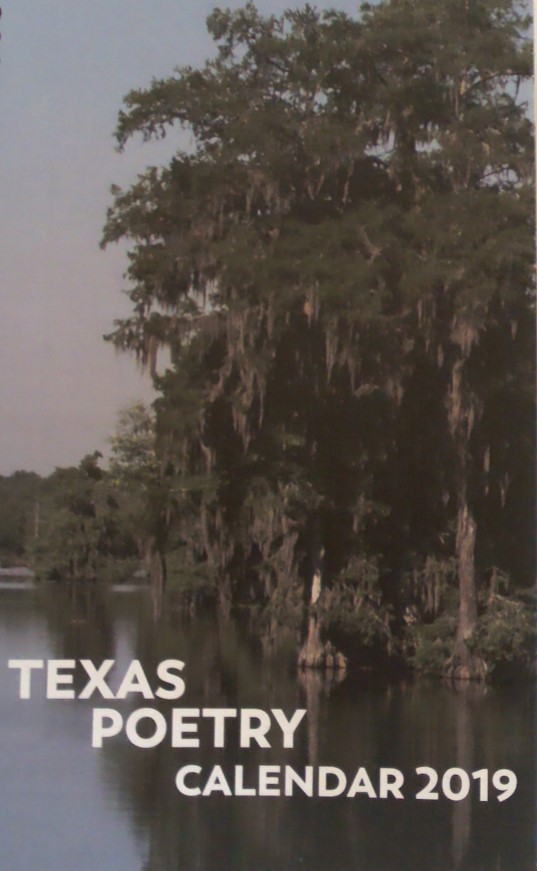
A couplet sonnet! Reprinted
in the Southern Poetry Anthology too!
|
|
Love
Grackles: their very name evoking greed,
aggression, chaos. Persistent as weeds,
a black plague, they swarm in like cloying clouds
of pestilence, ill-mannered, siren-loud.
Called devil birds by some, they persecute
the neighborhood, attack my outdoor cats
as if they're prey. At dinnertime, I stand
on guard; the grackles do not wait to land
at bowls unfinished, nabbing one kibble
per lunge. But one bird brings a sudden smile,
for morsel by humble morsel, he flies
from bowl to rail to partner. Kibble flows
from beak to beak like lovers swapping spit.
The bowl cleared, together they caw, then split.
|
|
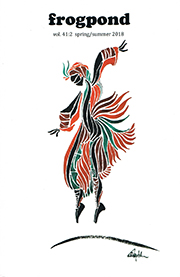
|
|
so she won't hear
when we talk about her
whispering "Alexa"
weather vane shifts
from north to south
off his meds
|
|

One of three golden shovels--
and a haibun too!
|
|
The Whole World
incorporating a Dickinson line (#657)
A fist opens, the
tight knuckles spreading
like blossoms, wide,
wider, but my
black pupils narrow,
can't keep up with hands
that ache to
flower, to gather
the pollens of paradise.
|
|
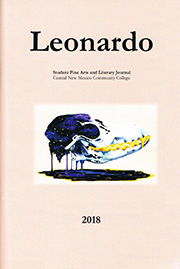
CNM's annual lit journal!
|
|
A Small Theft
I stole a spider today,
removed it from it home,
an empty pasta box under the sink.
It could have been the mother
of many children.
It might have been a bachelor.
Neither thought crossed my mind
when I stole it away.
It seemed an insignificant thing,
though its eyes were full of spice
and I spotted a patch of ink
on its belly when I lifted it up
in a wad of toilet paper.
I considered flushing it.
I considered smushing it.
Those eyes stared at me
with the burn of cayenne.
I opened the door to the patio,
where I intended to return it
to where I imagined it belonged,
as if I knew this spider's home
better than the spider itself
when I'm still looking for my own.
|
|
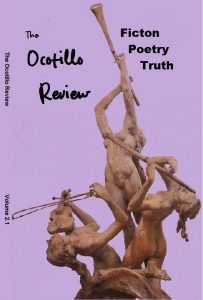
Another golden shovel!
|
|
Jumping Out of Bed Can Be Harmful to Your Health
incorporating a Dickinson line (#1263)
Sun breaks over the
mountain. This is the morning's truth:
easy hues of rose and amber. Must
every sunrise stun and dazzle
to be prized? Good should come gradually,
like extra minutes from snooze control or
the cautious drips of coffee into a poet: every
moment should add to the moment. No man
needs more than this truth to be--
any more could blind.
|
|
A ghazal, but of course!
|
|
Borrowed Earth
inspired by a Jim Bones' photograph
Sunlight tiptoes in, and sands sweep across the kiva.
We hear tumbleweeds dance and leap upon the kiva.
The sky is squandered here, and spider webs, invisible.
We breathe in dust, for rain does not weep into the kiva.
These earthen walls soothe, smack of smoke and bones.
Could we find true north from deep within the kiva?
Grains of maize rooted in the chamber's floor.
Ancestors honored: offerings to reap within the kiva.
Long ago, spirits cropped up from this dense dirt.
Rung by rung, the journey: steep, steep, up the kiva.
Overhead, a world of witches, walkers, and powders.
In the earth's belly, safe from their creep into the kiva.
Dreams are palpable here, silent and ancient as pelts.
How long have we been asleep inside the kiva?
|
|
Two other haiku also published,
"puckering clouds" and "wild rhubarb"!
|
|
streetsweepers
a clean break
from the news
|
|
Another ghazal,
as well as "Calligraphy 101"
|
|
Isle of the Blessed
starting with a Dickinson line (#1760)
Elysium is as far as to the very nearest room.
A curtain is used to create a wall, the sheerest room.
Years of drugs, although prescription, stickied his synapses.
He cannot remember when his mind was the clearest room.
Ask any two people--you won't get a match on paradise.
Could be a chamber in heaven, or could be the queerest room.
An old man wears a bib, drinks coffee from a sippy cup.
It's true that the final one is always the austerest room.
The relief of checking a watch: visiting hours are over.
Stifled and restrained. Who is alive in the merest room?
Can't take it with you--what's left can fit in a cardboard box.
Petal by petal, roses fall in the insincerest room.
When I have crossed the fields, traversed the quiet waters,
should I feel blessed to lie inside this severest room?
|
|

Another ghazal!
|
|
Passing of the Matriarch
starting with a Dickinson line (#995)
This was in the white of the year
when August took its bite of the year.
The sun scoured our pebbled hopes,
left no traces of blight on the year.
Bark peeled and leaves left like phantoms;
something was not right with the year.
Scorpions entered our gray homes,
offered little fight through the year.
We counted our tears like savings,
bankrupt as the night of the year.
Prayers made thuds in the crackled earth.
Muscles lost their might through the year.
Each day we wallowed in sorrow,
staggered through this plight on the year.
Absence, palpable as razors,
devoured all delight from the year.
Death was a spell lifted at last,
possibly the height of the year.
|
|

Posted on New Verse News
on June 11, 2017
|
|
Gay Pride
May we bike a wide expanse of untidy sands,
of outliers and isles of desert brush.
May we ride and ride, our eyes primed
to an iota of wild, a mite of wine
among the tumbleweeds and idle browns:
a bind of thriving cacti. Divine!
May we smile and find a vital prize,
a sign in the uncivilized silence,
a blooming lighthouse, a riot of pink fire,
our desired life, our private tribe.
May we ride inspired while our kind expires.
May we rise above the spineless of these times.
|
|
|
|
Speaking to the Snake
I only stayed for the children.
Layered in too many clothes,
I wanted to take off
everything, down to the bone.
I longed for solitude, far
from husbands, lovers,
kids--but I told no one.
Deserts beckoned, promising
meaning in emptiness,
if only I could go there,
but I stayed, I stayed,
my mouth stuffed with Eden.
|
|
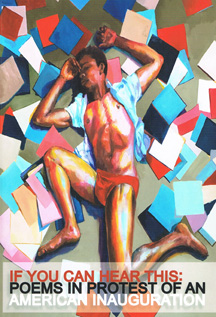
This is a special issue (#25)
of Assaracus: A Journal of Gay Poetry
|
|
Escape
starting with a Dickinson line (#508)
I'm ceded. I've stopped being theirs.
Now meeting dreams, not seeing theirs.
Unfettered of iron shackles,
I wasted life's days fleeing theirs.
Across the wide river I swim.
Is my freedom foreseeing theirs?
Out from shadows, into the light.
My own god, refereeing theirs.
In the clouds I soar from doctrine.
Choice is mine; disagreeing, theirs.
Sing the scars of my naked self.
My truth: no guaranteeing theirs.
|
|
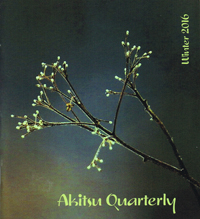
Also includes another haiku,
"November leaves"
|
|
snakeskin
the past left for others
to uncover
|
|
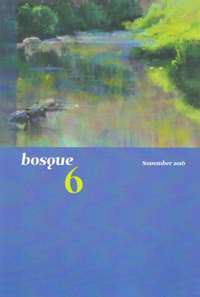
Also includes my sonnet,
"Couldn't Slow Down If I Tried (And I Tried)"
|
|
In One Ear, Out the Other
A nervous day. Caffeine and allergy
meds tramping through the blood. A chug, a jolt,
a lightning strike beneath the skin--whee! whee!
a rollercoaster ride. A jumpy colt
stamps, bucks, my head its small corral. Clear skies
don't help. A moon appears above the fence,
incongruous and plump. A pigeon flies
in circles like a scavenger. A sense
of wrong in every sight, in every thump
and pulse. I've picked the same damned scab again.
My foot taps like a code. An itch, a bump,
an edge--and whittled down by teeth, my pen.
No sleep tonight, no pardon will be found.
Shrill crickets rouse to my internal sound.
|
|
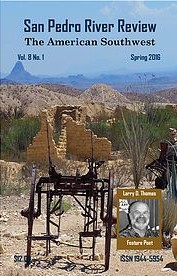
|
|
Another Night at the Maverick Inn
I can no longer tell whether they're
arguing or fucking or both,
their earth-thirsty interludes
of growls and grunts and slurs
battering the wall between our rooms.
Better, I guess, than guests
with blaring infomercials or insipid
laugh tracks, but I want to sleep.
Why can't motel walls
be insulated enough to avoid
every sudsy stream of piss,
every thrusting headboard bang?
Are these walls made of the same
toilet paper I've been hearing
roll off its spindle each night
at one a.m., and again at four?
I've got the AC cranked,
the squeaky ceiling fan whirring,
but nothing's loud enough
to drown out the randy--or angry--
couple, except when the train
thunders by, shrieking,
the conductor's sadism let loose.
Of course, the drapes don't close
entirely on either of the windows,
the sink has a continual drip,
and the pillows are lumpy
as biscuits and country gravy--
much that same gray color too.
Yet when I visit Alpine,
there's no other place
I'd rather stay. The truth is,
I don't sleep much better at home.
|
|
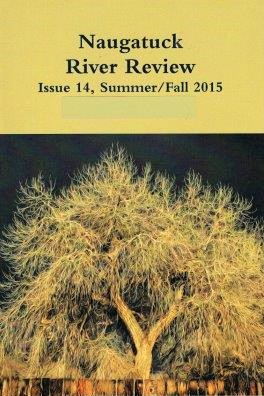
Also includes my husband's poem,
"A Step Beyond Silence"
|
|
The Possibilities
The lights were dim when I arrived,
Dr. S. so close I could smell
cigarettes emanating from his pores.
No one in the office but us. No nurse--
I had to swab the blood from my leg.
I watched his forearms, dark hair
swirling over the tight latex gloves.
He eased the knife through flesh
like a layer of seal blubber.
Can you feel it?
That was the year Disney's
The Little Mermaid came out on video.
My red-haired niece in Mesa
was into both Ariel and sharks.
She hated when I called her Ursula--NO, Ariel!--
but believed I'd been bitten by a shark
when she saw me change the dressing.
The hum of the fluorescent bulbs overhead.
A three-inch circle around the mole on my thigh.
Better here than some bony part.
The slow sewing of the stitches.
The sucking sounds of my flip-flops on asphalt.
I walked back to the car as if returning
home from a bad date, imagined
Dr. S. lighting up once I left.
Long before my niece's parents divorced, before
my parents moved there--different cancers--
the Phoenix desert called out,
a shark bite as easy to believe
as melanoma, as intimacy
with a doctor, as becoming a mermaid.
|
|
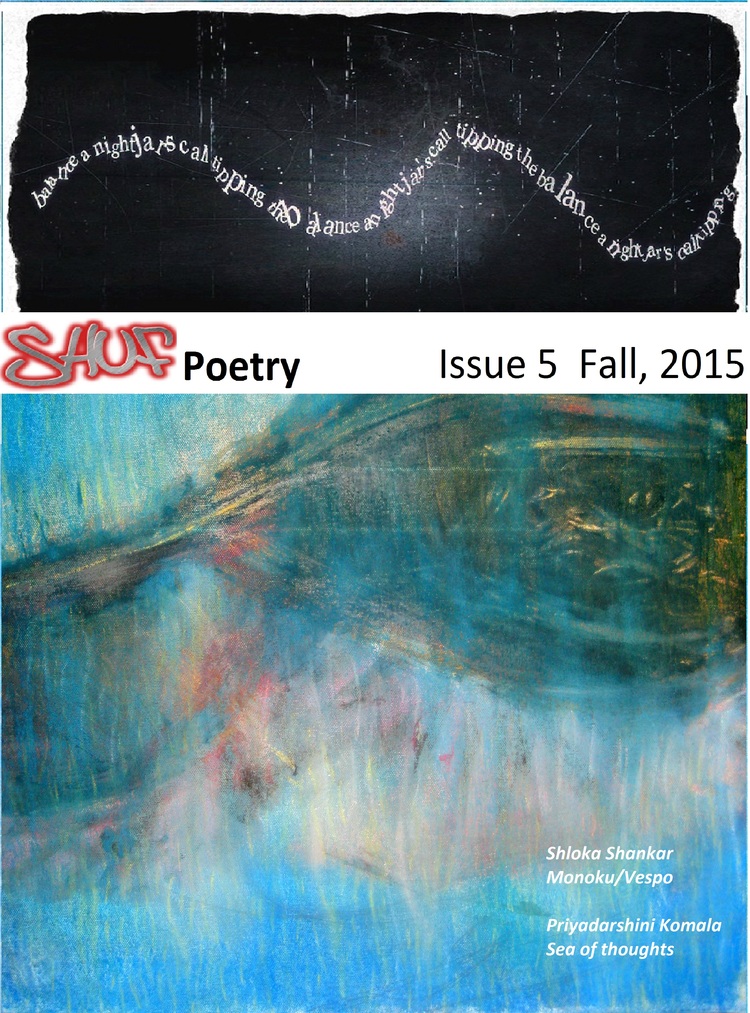
Also includes two other erasures,
"Marriage: A Unique Relationship"
and "The Rest of the Story."
|
|
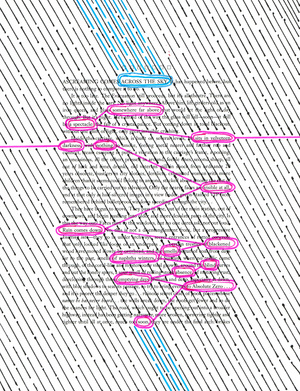
Across the Sky
|
|
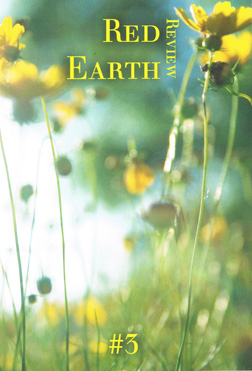
Also includes two other poems,
"The Old Familiar" and "Shrinking World Theory,"
a ghazal.
|
|
Why He Doesn't Want Me to Watch Dexter
Watch out!
Two dead mice.
See how they lie like commas
on the concrete sidewalk,
small enough to fit into a palm?
Not mauled, perhaps poisoned:
the park is sprayed weekly
with God-knows-what.
Close as yin-yang.
(I see you thinking,
Please don't name them
Yin and Yang.)
Did they seek solace in each other?
See how they nearly hug?
As if arranged there
for some unknown purpose.
No body parts missing,
no carving knife.
See those tiny ears,
those tiny digits?
Pay more attention.
You almost stepped on them.
When we get home,
we'll re-enact the scene:
Curl up,
grow fur,
be still.
|
|
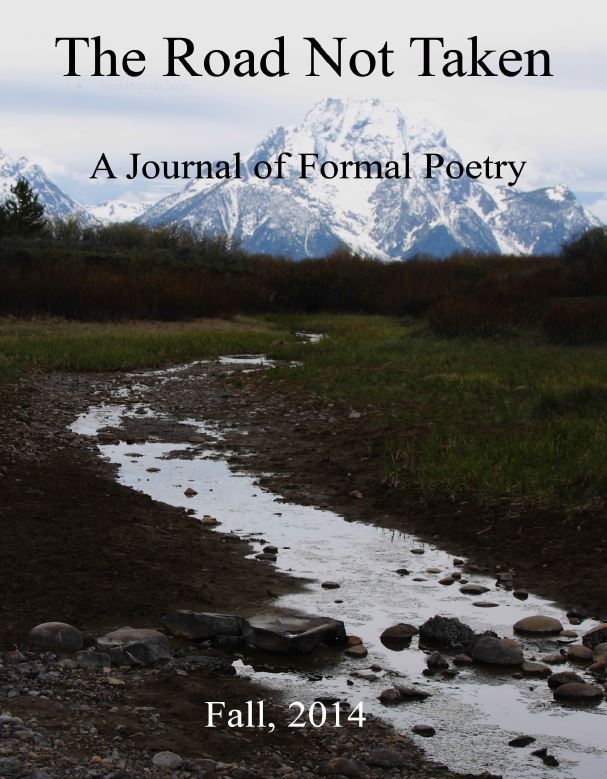
Also includes three other sonnets,
"Blue Heron," A Perfect Day," and "Too Brief"
|
|
Sentry
I heard them first--their quirky squawks--before
I saw the parrots. Green as jungles, fresh
as spring desire, their feathers rich and brash,
so unforeseen, I did a double-take.
So green on green, it took a stroke of luck
to spot these three among the leaves, but then
the telltale beaks, the doll-like eyes, the din
of vibrant colors. Where'd they been the last
ten months? And could I possibly have missed
such flash each day? I savor the moment,
aware it might soon fly away. I want
to turn virescent: blend into the green
as long as time allows. To stand alone,
remain a hidden sentry, wait for more.
|
|
Also includes my poems
"Hide and Seek" and "The Illustrated Man"
|
|
Nuptials
starting with a Dickinson line (#1116)
There is another loneliness that many die without.
Sixty-four years of trying--but you could fly without!
Why does Daddy's disapproval come as such a shock?
Your breath so shallow: a rattle, with; a sigh, without.
So you're a "fool" for wanting to marry? Then be a fool.
Don't let his dour mood influence your own. Defy without!
For sixteen years I've been a burr digging in his boot.
Uncomfortable with me, yet somehow awry without.
I do not feel estranged, for I've never been a part.
You've had too many years with--it's time to try without.
Don't let your father spade a hole in your full heart.
You're not your old man, you're mine, so do not cry without.
We're showered with congratulations, a flood of love.
He's the only one, the voice of drought. Reply with, "Out"!
|
|

|
|
Summertime
The willow yellows with each passing day.
Only July, too early for these leaves
to change their hues, yet cypress needles splay
beneath canopies gone to rust, and sheaves
of bark from sycamores curl at the trail.
The purple horsemint now is gray, and green
has faded from the field, wheat-colored, frail.
The drought is real, but not unforeseen
in Texas: miles of sky and not a speck
of cloud, just waves of heat rising like vines
once did--before withering. Mud and dreck,
the lake's down to nothing. Mosquitoes whine.
Even the water fowl seek shade. This park
too sere for the start of a long dry arc.
|
|
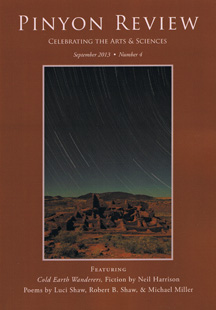
Also includes my sonnet,
"Theory of Relativity"
|
|
Texas Zen
The chinaberry leaves have yellowed, but
no other leaves have changed: dull browns, weak greens--
no purples, reds, or golds--the same old rut
we've seen for months, and now November leans
its chilly bones on window panes that fog
with every breath, a sign we're still alive
on days we have our doubts. If young I'd blog
about the trees, the reasons to contrive
a palette neither brown nor green, one full
of vibrant northern colors--Michigan,
New England--where fall is a spectacle,
the leach of chlorophyll, the origin
of orange, crimson--leaves heading toward death.
At this cold pane, I tally every breath.
|
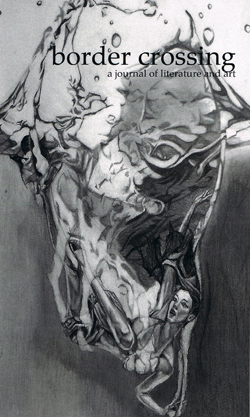
See Mary Oliver's poem,
"The Egret," the source
for this poem's vocabulary!
|
|
Therefore
The silent water,
green and sheer,
a white froth
at her edge
that open like scrolls.
Mottled frogs
shoulder in reeds,
words gone thin
in an instant,
then back,
smooth bellies weedy
inthe bamboo.
The polished wild
of her fish,
little shadows
inches from terror,
tasting death
at every shore,
the inverted world
of egrets and legs,
of flames and such.
A stranger
at her silky door,
I ripple into liquid.
|
|
|
Crepe Myrtles
Your trunks are smooth as shaven legs. I look
around before I run my hands up them--
can stroking trees, a little baby talk,
be all that wrong? So why this whiff of shame
when fingers rub your wooden bole, or when
my cheeks caress and nuzzle--well, you know
the spots. I close my eyes, clearly discern
a gentle moan--but should this be taboo?
Our love is hard, but I can't stay away,
for once my lips touched wood, I had no choice
but to succumb: I'm born to love on the sly.
The world may never sanction our embrace,
our honeyed, deciduous kind of kink.
Let's go further, out on a limb, toward pink.
|

|
|
My Zoo Story
My first thought: the man
on the park bench must be dead.
Head scrunched low into his chest,
shoulders curled into the comma
of his torso . . . but then a quiver,
the body language of deep sorrow.
I think of Jerry in The Zoo Story,
waiting for someone to help him
die. I fear I might be that someone.
A gust of wind scatters
crumpled leaves at his feet.
As if coming out of a trance,
he slowly lifts his head.
I see his face at last--
no pain, no tears.
A crooked grin and a wink.
His pants unzipped, he works
that thing like a knife.
|

|
|
Watching Glee with My Mother
Some things don't change.
The gay student is again
bashed into the lockers.
Slurs are all that's missing--
faggot! cocksucker!--
but this is network television.
I wipe away tears, hearing
the reverberation of bone on metal.
"This," I tell my mother,
"is what high school was like for me."
This is the most I've said
to my mother about that dim period
since she took me
to have my stomach pumped
four decades ago.
She never once asked why.
Murder wasn't in me,
though I thought about it.
There is always
another tormenter in waiting.
I did not want to die.
I wanted flight.
She says, "I thought this
was supposed to be a comedy."
"It gets better," I reply,
and the next musical number begins.
|

|
|
Woman with the Half-Inch Memory
Then erodes like a sand dune
spilling into the abyss of a lake.
Still, what can you do to hold back
the tumbling cascade of grains?
An apple a day won't help.
Plump memories thin to a whistle,
the tinny sound of time's dry breath.
You worry. You used to have
tricks, but now the shell game
turns up empty, empty, empty.
You used to be sharp. Puzzles?
No challenge. New ideas stuck
like fence posts lining a pasture.
The whole fat world awaited--
then left you in its dust, speeding up
while you slowed down, shrinking,
an ice cube in warm water.
You swallow cocktails of pills
to stave off deterioration,
but the grains are slipping faster
than medical progress. Your greens
are transforming into bronze.
You clench the best days deep in your fist,
your irrepressible grip already relaxing.
|

Yes, a sestina!
|
|
Limbo
You wait
for the eyes of light
to open, the dark to leave
and revisit its home.
Will you then face
the day and the need
to do something, a need
that drags a somber weight?
You slap your face
to snap to the light
easing into the orderly home.
You don't want to leave
the bed.
October leaves
shadow the blind need
for movement, like home
movies without sound. Wait
as the room floods with light
and the clock's face
glares, but you'll have to face
it sometime: everyone leaves,
unburdens, lightens,
accepts the body's needs
and the long wait
for home.
It takes effort to home
in on the forlorn face
in the mirror, the weight
more leaden, refusing to leave.
This hour of need,
this time of light,
when dark and light
are both a way home,
and all you really need
is hidden in lines in your face--
soon, soon you can leave.
But now you must wait,
face the need
for light, for home,
for leaving. Wait.
|

This is one of nine
of my poems that appears
in this issue of Assaracus
--a personal best.
|
|
Stand-Off
We went to bed like boars, but now
we wake without the strength to fight.
How we lose our passions, and how
the day shades with echoes of night.
Still we brood from hostile corners,
hold on to thoughts of wrong or right
like burnished martyrs, lost mourners--
the day shades with echoes of night.
Lights are dimmed. Love is kept in tow.
We, as polar as black and white,
speak with silence, watch the hours go.
The day shades with echoes of night.
|

My entire crown of sonnets,
"Days Too Close,"
appears in this issue.
This is the last sonnet in the crown.
|
|
Sunday
Tomorrow bears the weight. A new regime
of exercise? Of vitamins and bran?
Despite the years of shrinks, your self-esteem
is still a broken yolk in life's hot pan.
It's burning, bottom-sticking. Something's got
to change. Return to therapy? Increase
the meds? Or quit the job, the coffee pot?
Your life's consumed in quiet flames, and piece
by piece it peels away. You need new blood.
The phone won't ring, and even mother shuns
her Sunday call. You hear that gasping thud,
the siege of self imploding toward undone?
Another week dissolves like that--a flash.
The days have grown too close, all dun and ash. |
Thanks for stopping by! I'd love to hear any comments
you have about these poems!

|